A level Physics gives you the opportunity to explore the phenomena of the universe and to look at theories that explain what is observed. This subject combines practical skills with theoretical ideas to develop descriptions of the physical universe. You will learn about everything from kinematics to cosmology and many recent developments in fascinating topics, such as particle physics. If you are interested in the limits of space, the beginning of time and everything in between this is the subject for you. Physics is more than a subject – it trains your brain to think beyond boundaries. Physics is a seriously useful subject for the majority of STEM (science, technology, engineering and maths) careers and you’ll find physicists everywhere, in industry, transport, government, universities, the armed forces, the secret service, games companies, research labs and more. Physics is especially helpful for jobs that involve building things and developing new technologies, including: engineering (flight, buildings, space, you name it…), astronomy, robotics, renewable energies, computer science, communications, space exploration, science writing, sports and games technology, research and nanotechnology (that’s engineering on a seriously tiny molecular scale). You will already be familiar with many of the topics that you will study, including forces, waves, radioactivity, electricity and magnetism. At A-level, you’ll look at these areas in more detail and find out how they are interconnected. You will also learn how to apply maths to real-world problems and explore new areas suc
The entry requirements for this course are 5 GCSEs at grade 5 or above including Maths and English Language, as well as either a 6-6 or above in Combined Science, or a Grade 6 or above in Physics.
You will be assessed with three exams: • Paper 1 (2 hours, 85 marks, 34% of the A-level): Measurements, Particles and radiation, Waves, Mechanics and materials and Electricity • Paper 2 (2 hours, 85 marks, 34% of the A-level): Further mechanics, thermal physics, fields, nuclear physics • Paper 3 (2 hours, 80 marks, 32% of the A-level): Practical techniques and an optional course (one from astrophysics, medical physics, engineering physics, turning points or electronics)
About Education Provider
| Region | North West |
| Local Authority | St. Helens |
| Ofsted Rating | Good |
| Gender Type | Co-Educational |
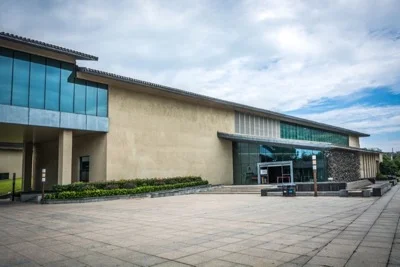
| Address | Elton Head Road, St Helens, WA9 5AU |
A level Physics gives you the opportunity to explore the phenomena of the universe and to look at theories that explain what is observed. This subject combines practical skills with theoretical ideas to develop descriptions of the physical universe. You will learn about everything from kinematics to cosmology and many recent developments in fascinating topics, such as particle physics. If you are interested in the limits of space, the beginning of time and everything in between this is the subject for you. Physics is more than a subject – it trains your brain to think beyond boundaries. Physics is a seriously useful subject for the majority of STEM (science, technology, engineering and maths) careers and you’ll find physicists everywhere, in industry, transport, government, universities, the armed forces, the secret service, games companies, research labs and more. Physics is especially helpful for jobs that involve building things and developing new technologies, including: engineering (flight, buildings, space, you name it…), astronomy, robotics, renewable energies, computer science, communications, space exploration, science writing, sports and games technology, research and nanotechnology (that’s engineering on a seriously tiny molecular scale). You will already be familiar with many of the topics that you will study, including forces, waves, radioactivity, electricity and magnetism. At A-level, you’ll look at these areas in more detail and find out how they are interconnected. You will also learn how to apply maths to real-world problems and explore new areas suc
The entry requirements for this course are 5 GCSEs at grade 5 or above including Maths and English Language, as well as either a 6-6 or above in Combined Science, or a Grade 6 or above in Physics.
You will be assessed with three exams: • Paper 1 (2 hours, 85 marks, 34% of the A-level): Measurements, Particles and radiation, Waves, Mechanics and materials and Electricity • Paper 2 (2 hours, 85 marks, 34% of the A-level): Further mechanics, thermal physics, fields, nuclear physics • Paper 3 (2 hours, 80 marks, 32% of the A-level): Practical techniques and an optional course (one from astrophysics, medical physics, engineering physics, turning points or electronics)