This exciting and popular academic subject offers you a chance to study in detail the way the media communicates with its audiences, and to be involved in a number of production projects where you can put your knowledge to practical effect. The focus will be on the major media forms: radio, television, print (magazines) and film (documentaries), as well as the new media technologies, such as the Internet.
You will need to meet the general entry requirements of: - 5 GCSE passes at Grades 9-5 - At least Grade 4 in Mathematics - At least Grade 5 in English Language and English Literature
Component 1: Media Products, Industries and Audiences - Written examination: 2 hours 15 minutes (35% of qualification) The examination assesses media language, representation, media industries, audiences and media contexts. It consists of two sections: Section A: Analysing Media Language and Representation (2 questions) This section assesses media language and representation in relation to two of the following media forms: advertising, marketing, music video or newspapers. Section B: Understanding Media Industries & Audiences This section assesses two of the following media forms – advertising, marketing, film, newspapers, radio, video games - and media contexts. Component 2: Media Forms and Products in Depth Written examination: 2 hours 30 minutes (35% of qualification) The examination assesses media language, representation, media industries, audiences and media contexts. It consists of three sections: Section A – Television in the Global Age There will be one two-part question or one extended response question. Section B – Magazines: Mainstream and Alternative Media There will be one two-part question or one extended response question. Section C – Media in the Online Age There will be one two-part question or one extended response question. Component 3: Cross-Media Production Non-exam assessment (30% of qualification) An individual cross-media production based on two forms in response to a choice of briefs set by WJEC, applying knowledge and understanding of the theoretical framework and digital convergence.
About Education Provider
| Region | South East |
| Local Authority | Slough |
| Ofsted Rating | Good |
| Gender Type | Girls |
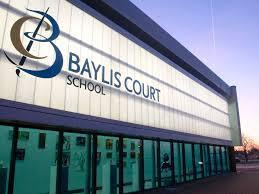
| Address | Gloucester Avenue, Slough, SL1 3AH |
This exciting and popular academic subject offers you a chance to study in detail the way the media communicates with its audiences, and to be involved in a number of production projects where you can put your knowledge to practical effect. The focus will be on the major media forms: radio, television, print (magazines) and film (documentaries), as well as the new media technologies, such as the Internet.
You will need to meet the general entry requirements of: - 5 GCSE passes at Grades 9-5 - At least Grade 4 in Mathematics - At least Grade 5 in English Language and English Literature
Component 1: Media Products, Industries and Audiences - Written examination: 2 hours 15 minutes (35% of qualification) The examination assesses media language, representation, media industries, audiences and media contexts. It consists of two sections: Section A: Analysing Media Language and Representation (2 questions) This section assesses media language and representation in relation to two of the following media forms: advertising, marketing, music video or newspapers. Section B: Understanding Media Industries & Audiences This section assesses two of the following media forms – advertising, marketing, film, newspapers, radio, video games - and media contexts. Component 2: Media Forms and Products in Depth Written examination: 2 hours 30 minutes (35% of qualification) The examination assesses media language, representation, media industries, audiences and media contexts. It consists of three sections: Section A – Television in the Global Age There will be one two-part question or one extended response question. Section B – Magazines: Mainstream and Alternative Media There will be one two-part question or one extended response question. Section C – Media in the Online Age There will be one two-part question or one extended response question. Component 3: Cross-Media Production Non-exam assessment (30% of qualification) An individual cross-media production based on two forms in response to a choice of briefs set by WJEC, applying knowledge and understanding of the theoretical framework and digital convergence.