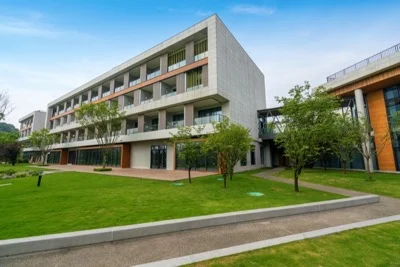
Photography at Aquinas is an exciting and challenging subject that encourages students to be creative and show a more personal understanding of Photography. This course aims to promote a broad-based learning experience across a range of themes in digital lens-based processes and practical techniques. The course aims to encourage creative thinking and artistic understanding, as well as develop students' use of the camera. During Year One students will build up skills through techniques and processes, some of which will be done at GCSE some of which will be new experiences, all of which will be at a more advanced level. The first year aims to ensure that students can experience the full range of digital lens-based learning to enhance skills and techniques. Students will be introduced to a variety of themes, from architecture to still life, responding to artists and photographers, focusing on experimenting with different aspects of the camera; for those new to Photography learning their way around the camera, for more experienced Photographers improving and adapting to their strengths. Students will also respond in practical ways. In Year Two students are expected to work more independently, developing work over a longer period, showing a higher level of personal interpretation, and working on developing ideas more in-depth. Students will use research into the work of artists, photographers, and designers to develop their knowledge and understanding of Photography throughout the two years. Studying Photography at Aquinas can lead to a wide variety of courses at the University. Students have gone on to study Film Production at Salford University and Future Works, Photography at Leeds College of Art, and Advertising and Marketing at Leeds. Some students have gone on to study an Art and Design Foundation Course before applying to University, and many of our students have gained places on the MMU Foundation Course or the Stockport Foundation Course. Many Art and Design-related degree courses expect students to have an Art Foundation Course after studying A-level. Students who study A-level photography alongside other subjects have gone on to study a wide range of different subjects in Higher Education, gaining degrees in Fine Art and costume, amongst other courses as well as applying for Apprenticeships or gaining employment.
Six GCSEs at grade 4 (must include both English Language and Maths).
Year 1 – Knowledge, Understanding and Skills Students will gain experience of working with the Digital SLR learning how to use the camera from basic controls through to manual settings, from lighting techniques to experimental processes. Alongside each topic, students will be introduced to photographers and artists to inspire and respond to both with their photography and also through practical responses such as ‘drawing into’, wax entrapment, tape transfers, cut-outs, and digital manipulation. There are two main projects the Portfolio where students will respond to a range of short topics to build up a folder of techniques, followed by an extended project where students respond to one theme for the final part of year 1, in a more personal way. Year 2 – Progression and Formal Assessment Building on skills learned in the first year through two assessed projects: Component 1: Personal Investigation (60%) Component 2: Externally Set Assignment (40%)
About Education Provider
| Region | North West |
| Local Authority | Stockport |
| Ofsted Rating | Good |
| Gender Type | Co-Educational |
| Address | Nangreave Road, Stockport, SK2 6TH |
Photography at Aquinas is an exciting and challenging subject that encourages students to be creative and show a more personal understanding of Photography. This course aims to promote a broad-based learning experience across a range of themes in digital lens-based processes and practical techniques. The course aims to encourage creative thinking and artistic understanding, as well as develop students' use of the camera. During Year One students will build up skills through techniques and processes, some of which will be done at GCSE some of which will be new experiences, all of which will be at a more advanced level. The first year aims to ensure that students can experience the full range of digital lens-based learning to enhance skills and techniques. Students will be introduced to a variety of themes, from architecture to still life, responding to artists and photographers, focusing on experimenting with different aspects of the camera; for those new to Photography learning their way around the camera, for more experienced Photographers improving and adapting to their strengths. Students will also respond in practical ways. In Year Two students are expected to work more independently, developing work over a longer period, showing a higher level of personal interpretation, and working on developing ideas more in-depth. Students will use research into the work of artists, photographers, and designers to develop their knowledge and understanding of Photography throughout the two years. Studying Photography at Aquinas can lead to a wide variety of courses at the University. Students have gone on to study Film Production at Salford University and Future Works, Photography at Leeds College of Art, and Advertising and Marketing at Leeds. Some students have gone on to study an Art and Design Foundation Course before applying to University, and many of our students have gained places on the MMU Foundation Course or the Stockport Foundation Course. Many Art and Design-related degree courses expect students to have an Art Foundation Course after studying A-level. Students who study A-level photography alongside other subjects have gone on to study a wide range of different subjects in Higher Education, gaining degrees in Fine Art and costume, amongst other courses as well as applying for Apprenticeships or gaining employment.
Six GCSEs at grade 4 (must include both English Language and Maths).
Year 1 – Knowledge, Understanding and Skills Students will gain experience of working with the Digital SLR learning how to use the camera from basic controls through to manual settings, from lighting techniques to experimental processes. Alongside each topic, students will be introduced to photographers and artists to inspire and respond to both with their photography and also through practical responses such as ‘drawing into’, wax entrapment, tape transfers, cut-outs, and digital manipulation. There are two main projects the Portfolio where students will respond to a range of short topics to build up a folder of techniques, followed by an extended project where students respond to one theme for the final part of year 1, in a more personal way. Year 2 – Progression and Formal Assessment Building on skills learned in the first year through two assessed projects: Component 1: Personal Investigation (60%) Component 2: Externally Set Assignment (40%)