Physics
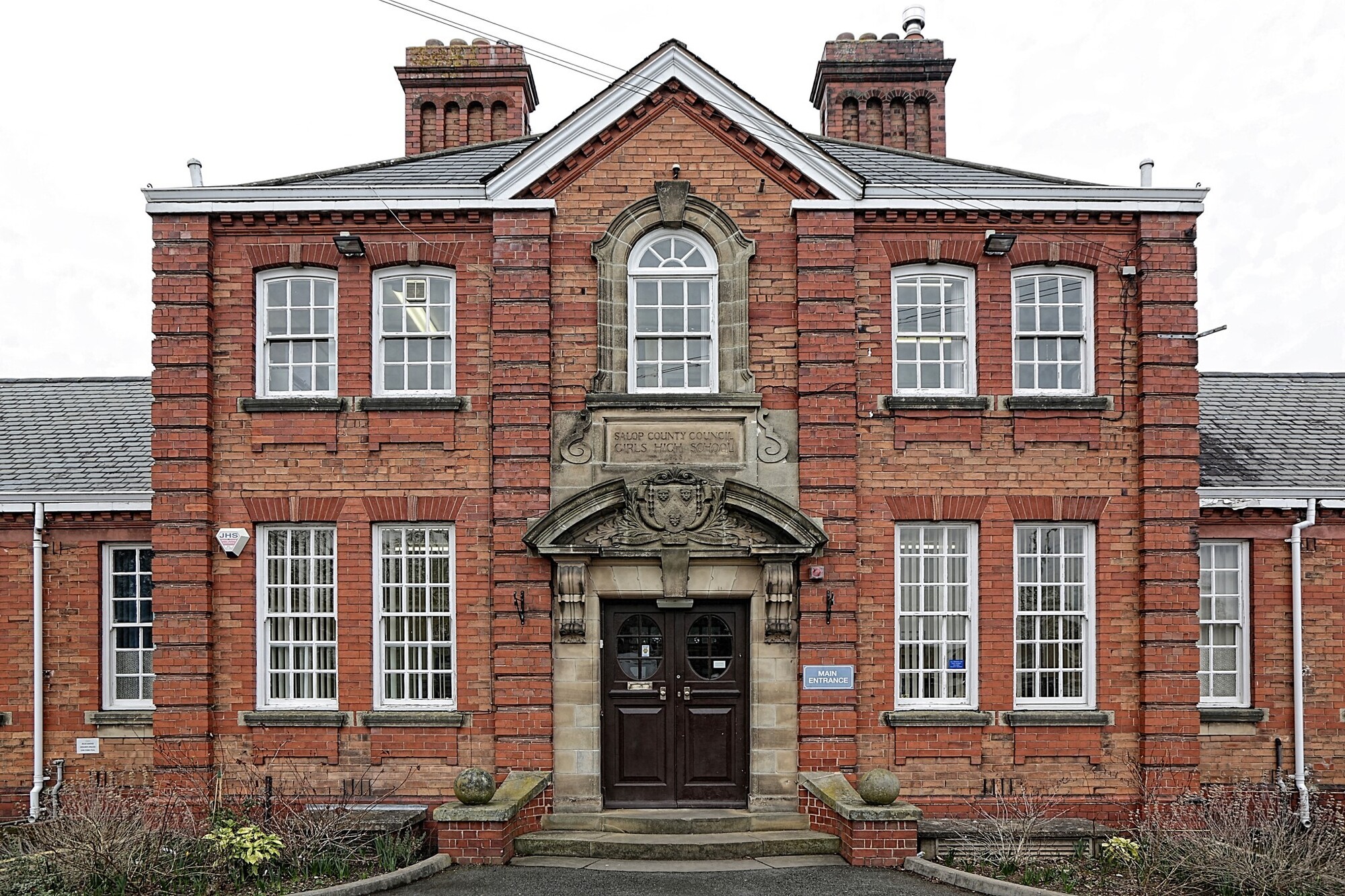
Newport Girls' High School Academy

Course summary
The A-level course is a two-year linear course, with all assessments taking place at the end of two years. Year 1 focuses on forces, dynamics, energy, materials, electricity, waves, particles and radiation. In Year 2 we study circular motion, simple harmonic motion, nuclear physics, thermal physics, and explore the concept of force fields in gravitation and electromagnetism. There is also an optional topic, one from Astrophysics, Medical Physics, Engineering Physics, Turning Points in Physics and Electronics. The approach will be to develop good thinking and problem solving skills while gaining a solid understanding of the various topics. There will be numerous opportunities to carry out experiments to link theory to reality. Practical and evaluative skills as well as data analysis will be developed throughout the course and assessed via structured tasks. EXAM STRUCTURE There are three, two hour exams at the end of the second year. All three papers contain short and long answer questions as well as multiple choice questions. At least 40% of the marks in assessments will require the use of mathematical skills which are to the standard of higher tier GCSE mathematics. In addition, there are a set of practical skills that each candidate must demonstrate through at least 12 required practical activities across the two years. Although grades in practical work will not count towards the final A-level, candidates must attain a “pass” mark on all these skills to gain the A-level, and Papers 1 and 3 will include questions that assess aspects of these compulsory skills and practical activities. OPPORTUNITIES AFTER THE COURSE Physics A-level is widely regarded as the most mathematical, mentally stimulating and challenging of all the three sciences. For this reason it is highly valued by admissions tutors and employers. It provides an insight into the world around us at all scales, from the inner workings of the atom to the birth and formation of the universe, as well as everything else in between. It is at the heart of all big technological advances in transport, communications, computing, robotics and materials to name but a few. The course trains students to take a logical, problem-solving approach to whatever situations they may find themselves in. The subject engenders independent thinking and resilience as well as a tenacious approach and the ability to pay attention to detail. Physics students explore concepts and methods of science and gain analytical, thinking and experimental skills that are not only widely applicable in many professional areas but also highly regarded by every sector. A-level Physics is an expected entrance qualification to university degrees in Physics, Geophysics and all Engineering degrees where it pairs well with Maths, Further Maths and Chemistry A-levels. It is also viewed favourably when applying to study a wide range of degrees, from Architecture to Medicine, Food Science and Climatology, or even where its relevance is not immediately obvious such as Philosophy and Law. Physics is a very satisfying (and fun!) subject to study at A-level. If you are curious about the world you live in and you thrive on a challenge then Physics is the subject for you. STRUCTURE OF TERMINAL ASSESSMENTS 1. Measurements and their errors, Particles and Radiation, Waves, Mechanics and Materials, Electricity and Simple Harmonic Motion (34% of A-level) 2. Further Mechanics and Thermal Physics, Fields and their consequence and Nuclear Physics (34% of A-level) 3. Practical Skills and Data Analysis and Optional Topic (32% of A-level)
About School

0%