Students focus in the first term of year 12 on Pure Mathematics, building on GCSE studies in algebraic methods and coordinate geometry before an introduction to calculus. The study of trigonometry at A level builds across two years with significant links through parametric equations to mathematical modelling used in degree level Physics and Engineering. These Pure maths themes are developed further in year 13 with explorations of functions, series and sequences. Mechanics is the crossover between Physics and Mathematics, studying motion and forces in both one and two dimensions. Statistical distributions are used to analyse data and make predictions, with close links to research methods in Psychology, Geography, and Biology. Students aspiring to a career in medicine gain valuable learning that supports research and development through robust modelling, data collection and analysis. The probability theory associated with statistical hypothesis testing develops through the two-year course.
Our general entry requirements are that you need 5 Grade 6s in your GCSEs to study A Levels. Our entry requirement for A level mathematics is a GCSE mathematics grade of 7 or above. GCSE Statistics and/or GCSE Further Mathematics are not a requirement of this course, but both offer an advantage in terms of students having already met more aspects of the course prior to their A level studies.
A level mathematics is a linear qualification assessed through three external papers sat at the end of the two-year course. Two of these exams assess Pure Mathematics, with both papers incorporating the full two-year content. The third paper assesses statistics and mechanics. Exams in mathematics at A level place significant emphasis on the importance of mathematical reasoning with a requirement to justify the solution to a problem with a robust and well set out explanation.
About Education Provider
| Region | East Midlands |
| Local Authority | Nottingham |
| Ofsted Rating | Good |
| Gender Type | Mixed |
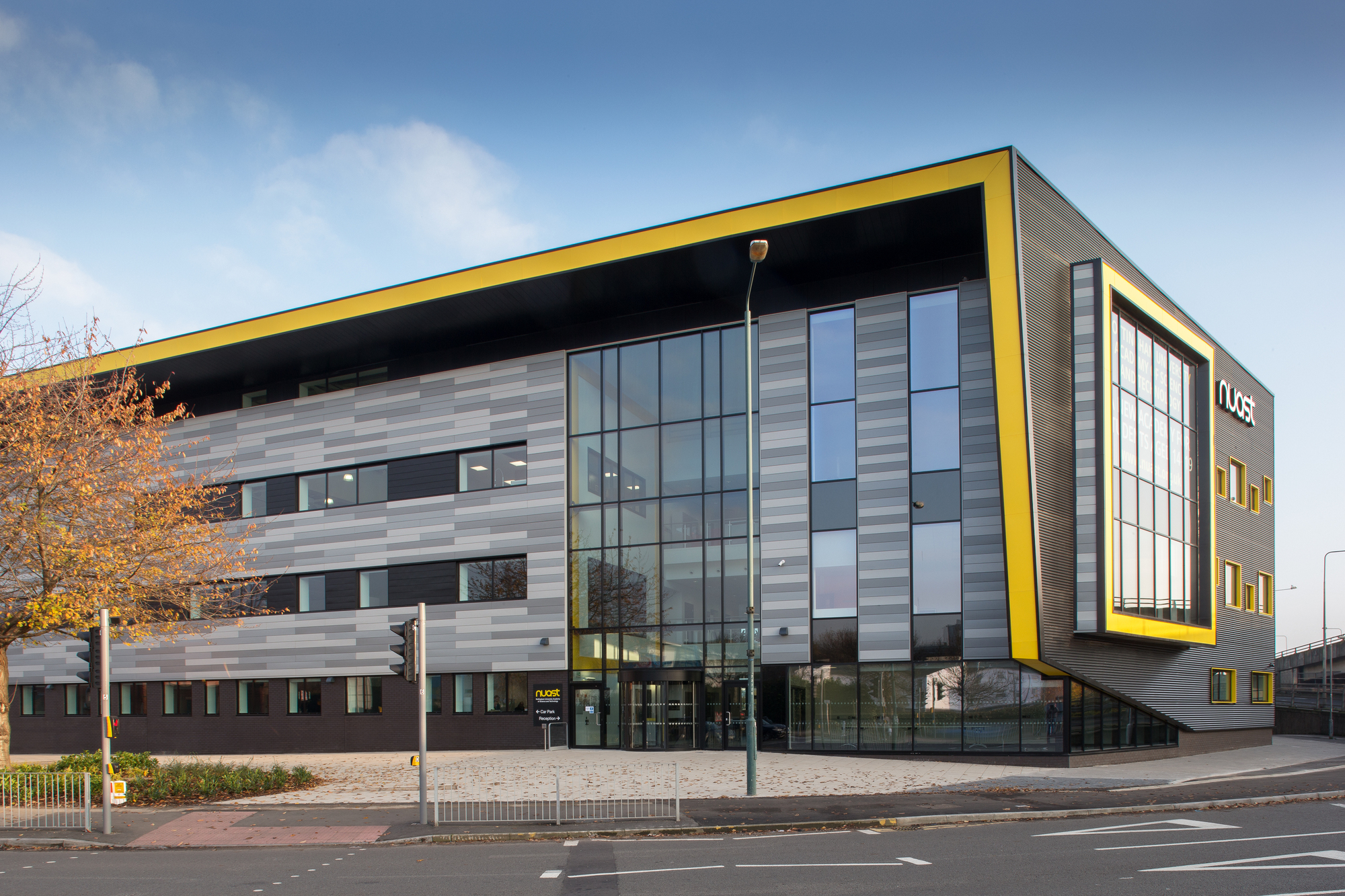
| Address | 93 Abbey Street, Nottingham, NG7 2PL |
Students focus in the first term of year 12 on Pure Mathematics, building on GCSE studies in algebraic methods and coordinate geometry before an introduction to calculus. The study of trigonometry at A level builds across two years with significant links through parametric equations to mathematical modelling used in degree level Physics and Engineering. These Pure maths themes are developed further in year 13 with explorations of functions, series and sequences. Mechanics is the crossover between Physics and Mathematics, studying motion and forces in both one and two dimensions. Statistical distributions are used to analyse data and make predictions, with close links to research methods in Psychology, Geography, and Biology. Students aspiring to a career in medicine gain valuable learning that supports research and development through robust modelling, data collection and analysis. The probability theory associated with statistical hypothesis testing develops through the two-year course.
Our general entry requirements are that you need 5 Grade 6s in your GCSEs to study A Levels. Our entry requirement for A level mathematics is a GCSE mathematics grade of 7 or above. GCSE Statistics and/or GCSE Further Mathematics are not a requirement of this course, but both offer an advantage in terms of students having already met more aspects of the course prior to their A level studies.
A level mathematics is a linear qualification assessed through three external papers sat at the end of the two-year course. Two of these exams assess Pure Mathematics, with both papers incorporating the full two-year content. The third paper assesses statistics and mechanics. Exams in mathematics at A level place significant emphasis on the importance of mathematical reasoning with a requirement to justify the solution to a problem with a robust and well set out explanation.