Physics asks ‘why’ relentlessly. Physicists do not accept things at face value; they insist on digging deeper, uncovering the real fundamentals of Science, and when we say the fundamentals, we mean nothing less than the frontiers of human understanding. Physicists relish the questions that cannot be answered easily. We scrutinise the very small (as witnessed by the experiments at the Large Hadron Collider in Switzerland), and we grapple with incomprehensible scale as we painstakingly map the universe itself. This curiosity has led to huge technological advances that continue to radically change our lives — mobile phones, 3D medical scanning, the Internet. Course Content: The course covers a wide field of Physics topics, including quantum behaviour, fields, nuclear physics, astrophysics, thermodynamics and motion analysis. While the course has no coursework element, with the assessment being 100% examined, practical work is still core to our teaching. Students are given a teacher-assessed endorsement of their practical skills and their knowledge of mandatory experiments from the specification is tested in their exams. Mathematical questions make up at least 40% of the A-Level assessment, so choosing Physics and Maths together is a very strong option choice.
Minimum GCSE of 7 in Maths. GCSE 6 in Physics or 7/7 in Combined Science.
Students take two internal papers at the end of Year 12, covering all the year's material. At the end of Year 13, students take three papers that cover the full content of the two year course. These three papers provide the full A-Level grade.
About Education Provider
| Region | East of England |
| Local Authority | Essex |
| Ofsted Rating | Outstanding |
| Gender Type | Co-Educational |
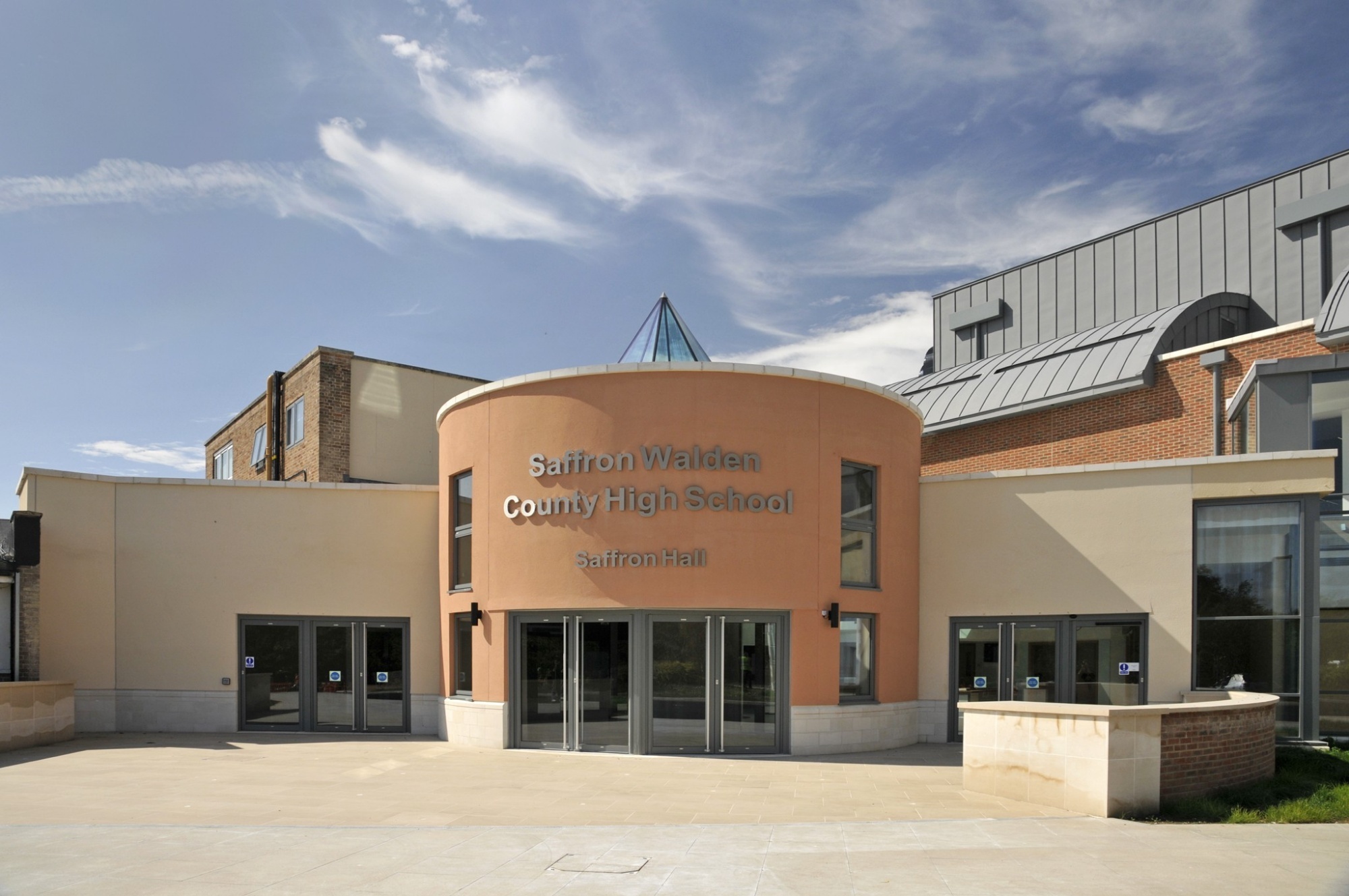
| Address | Audley End Road, Saffron Walden, CB11 4UH |
Physics asks ‘why’ relentlessly. Physicists do not accept things at face value; they insist on digging deeper, uncovering the real fundamentals of Science, and when we say the fundamentals, we mean nothing less than the frontiers of human understanding. Physicists relish the questions that cannot be answered easily. We scrutinise the very small (as witnessed by the experiments at the Large Hadron Collider in Switzerland), and we grapple with incomprehensible scale as we painstakingly map the universe itself. This curiosity has led to huge technological advances that continue to radically change our lives — mobile phones, 3D medical scanning, the Internet. Course Content: The course covers a wide field of Physics topics, including quantum behaviour, fields, nuclear physics, astrophysics, thermodynamics and motion analysis. While the course has no coursework element, with the assessment being 100% examined, practical work is still core to our teaching. Students are given a teacher-assessed endorsement of their practical skills and their knowledge of mandatory experiments from the specification is tested in their exams. Mathematical questions make up at least 40% of the A-Level assessment, so choosing Physics and Maths together is a very strong option choice.
Minimum GCSE of 7 in Maths. GCSE 6 in Physics or 7/7 in Combined Science.
Students take two internal papers at the end of Year 12, covering all the year's material. At the end of Year 13, students take three papers that cover the full content of the two year course. These three papers provide the full A-Level grade.